

Heritage storytelling helps UAE brands connect their history with modern consumers, building trust and standing out in a competitive market.
Key insights:
- 70% of UAE shoppers prefer local products for their authenticity.
- Heritage elements like Emirati craftsmanship, local materials, and cultural traditions can elevate a brand’s image.
- Examples like Mirzam Chocolate and Al Ain Water show how linking heritage to modern values can create emotional connections.
- Digital platforms, with 99% internet penetration in the UAE, are critical for sharing these stories effectively.
- Brands must ensure consistency across all touchpoints – product packaging, events, and social media.
What Is Heritage Brand Storytelling
Heritage storytelling takes a brand’s history, traditions, and cultural connections and turns them into a powerful narrative that sets it apart in the marketplace. It’s about staying true to your core values while adapting to modern trends – a way to connect rapid progress with deeply rooted traditions like oral storytelling, pearl diving, and falconry.
Think of it like turning the "Made in UAE" label into more than just a mark of origin. It becomes a story of quality and ingenuity. Take Al Ain Water, for example. By presenting itself as a "guardian of wellness" with strong local ties, it’s not just selling bottled water – it’s weaving a story that helps it stand out against global competitors. The brand’s emphasis on purity, health, and sustainability creates an emotional bond that extends beyond the product itself.
This approach also builds trust, especially in a world where consumers are increasingly sceptical. In the UAE, 70% of shoppers now prefer local products for their authenticity. That connection to a brand’s roots can even justify higher prices – 61% of luxury buyers say they’re influenced by craftsmanship and heritage when making purchases. This sets the stage for understanding how authenticity plays a key role in fostering consumer trust.
How Authenticity Builds Trust in Heritage Messaging
Authenticity is all about being transparent and staying true to your brand’s story. It means sharing real, meaningful details – whether that’s showing how your products are made or highlighting certifications like Halal or ISO as part of your narrative, not just as labels on your packaging.
What makes this strategy so effective is the emotional connection it creates. Stories that evoke nostalgia or reflect shared experiences have a lasting impact on consumers. Studies show that 81% of British participants and 83% of Americans enjoy things that remind them of the past. This trend is just as relevant in the UAE, where Gen Z, in particular, values stories that promote unity, identity, and social causes.
"Anything that we are comes from our past. This isn’t about wallowing in nostalgia, but about learning from history and liberating ideas from their original context." – Miuccia Prada, Creative Director
But here’s the catch: authenticity can’t be faked. Brands need to go beyond surface-level gestures and focus on genuine traditions, symbols, and values. For instance, Mirzam Chocolate taps into the region’s historical spice trade routes, turning its products into items of cultural significance.
Linking Heritage to Modern Values
Heritage storytelling doesn’t just build trust – it also drives innovation. This is where the "Heritage Paradox" comes into play: staying true to your past can actually inspire forward-thinking ideas. A strong connection to your roots provides a solid base for evolution, allowing you to embrace change without losing your identity. This balance is especially crucial in the UAE, where brands must blend traditional elements with advanced technology.
Emirates Airline is a great example. It ties its brand story to Dubai’s role as a global hub while staying rooted in Emirati hospitality traditions.
Even newer brands can use heritage storytelling effectively. You don’t need centuries of history to craft a compelling narrative. By drawing on cultural roots, traditional techniques, or community values, you can create what’s known as "instant heritage." With internet penetration in the UAE exceeding 99%, digital platforms are the ideal place to share these stories, reaching broad audiences while staying connected to tradition.
The next step? Learning how to tell these heritage stories in a way that truly resonates with your audience.
sbb-itb-6cae99a
How to Create Heritage Stories That Connect
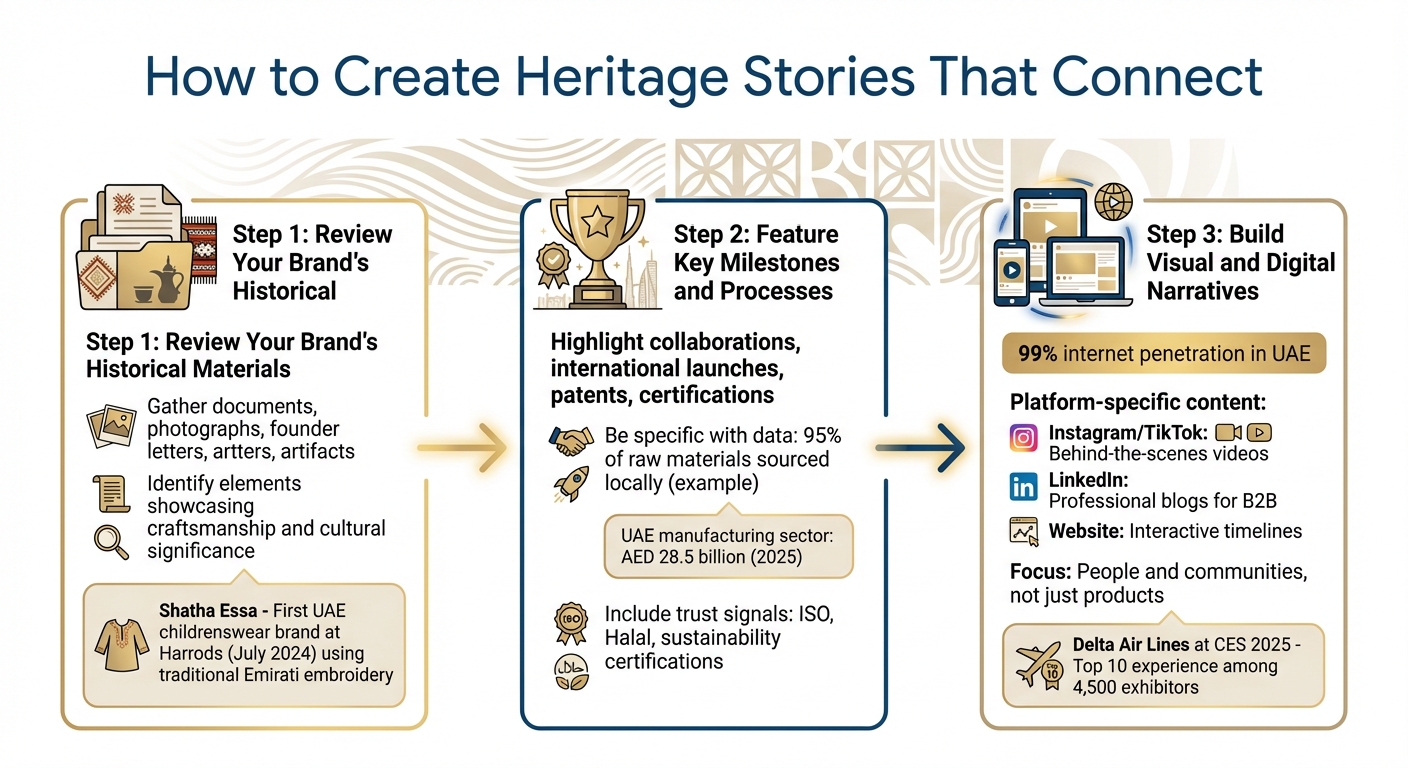
3-Step Heritage Storytelling Framework for UAE Brands
Heritage storytelling is more than just showcasing old photographs – it’s about weaving your brand’s history into a narrative that resonates with today’s audience. Here’s how businesses in the UAE can turn their historical assets into engaging stories that reflect their legacy.
Step 1: Review Your Brand’s Historical Materials
Start by gathering everything that represents your brand’s journey – documents, photographs, founder letters, and artefacts. Include cultural elements like Emirati embroidery, sadu weaving, or iconic architectural motifs such as breeze blocks and gahwa cup silhouettes. These details can beautifully highlight your brand’s connection to local traditions.
Take the time to organise these materials and identify what truly reflects your legacy. Look for elements that showcase craftsmanship, cultural significance, or deep community ties. For instance, in July 2024, Emirati designer Shatha Essa made history by becoming the first UAE childrenswear brand to launch at Harrods in London. She achieved this by blending traditional Emirati embroidery and breeze block patterns into modern luxury fashion. This demonstrates how cultural heritage can set a brand apart on the global stage.
Even newer brands can tap into cultural traditions to establish a sense of heritage from the start.
Step 2: Feature Key Milestones and Processes
Highlight the moments that define your brand’s credibility and growth. These could include collaborations with industry leaders, international launches, or achievements like patents and certifications. Focus on milestones that inspire trust and reflect innovation.
Be specific when sharing details. For example, instead of saying "locally sourced", specify that "95% of raw materials are sourced locally." Combining traditional aesthetics with measurable achievements creates a compelling balance of legacy and progress.
Certifications like ISO, Halal, or sustainability marks shouldn’t just appear on your packaging – they should be part of your story. These trust signals validate your commitment to quality and innovation. With the UAE’s manufacturing sector valued at AED 28.5 billion in early 2025, following a 5% annual growth rate, now is the perfect time to highlight the "Made in UAE" identity as a symbol of excellence.
Once you’ve identified your key milestones, it’s time to bring them to life visually.
Step 3: Build Visual and Digital Narratives
Transform your historical materials and milestones into digital content that connects with your audience. With internet penetration in the UAE exceeding 99%, your heritage story needs to thrive on platforms like Instagram, TikTok, LinkedIn, and your website.
Create behind-the-scenes content that reveals your production processes and quality checks. This level of transparency builds trust far more effectively than polished marketing claims. Use short-form videos for platforms like TikTok and Instagram, and publish professional blogs for B2B audiences. You could also design interactive timelines that pair historical images with modern achievements to showcase your evolution.
A great example of this approach was seen at the 2025 Consumer Electronics Show (CES) in Las Vegas, where Delta Air Lines combined 100 years of history with cutting-edge technology. By focusing on employee stories from past and present, they created a "people-first" narrative that stood out, earning recognition as one of the top 10 experiences among 4,500 exhibitors. For UAE brands, this means focusing not just on products but also on the people and communities behind them.
Crafting a digital narrative not only preserves your heritage but also positions your brand as forward-thinking and relevant in today’s market.
Tailoring Heritage Stories for Different Audiences
Crafting heritage stories that resonate across diverse audiences is both an art and a necessity in the UAE. With over 200 nationalities coexisting, the challenge lies in striking a balance – connecting deeply with Emiratis while appealing to expatriates from regions like India, the Philippines, and Europe. The secret? Adapt your storytelling while staying true to its essence.
Using Local Messaging for Cultural Fit
When addressing Emirati audiences, authenticity takes precedence over perfection. Incorporate Arabic typography, traditional elements like sadu weaving, and references to the UAE’s rich history. However, don’t fall into the trap of tokenism – simply translating content or adding superficial cultural symbols won’t suffice. Natasha Hatherall-Shawe, Founder and CEO of TishTash, highlights this perfectly:
"It’s the local voices who should be shaping campaigns, not a marketing or PR director sitting at headquarters who has never set foot in Riyadh or Doha."
Collaborate with local creatives – photographers, writers, and influencers – right from the brainstorming phase. This ensures the tone and message align with the cultural nuances of different regions. For instance, what works in Dubai might need tweaking to resonate with audiences in Abu Dhabi or Sharjah. Conducting focus groups can help fine-tune your approach.
For expatriates, keeping the narrative straightforward while focusing on shared values like innovation, sustainability, and quality is key. Pair these with tangible benefits, such as the global reputation of Jebel Ali Port or its top-tier logistics. Brands like Mirzam Chocolate excel at this by weaving the UAE’s historical spice trade routes into their packaging, turning their products into cultural treasures that appeal to international residents seeking a touch of luxury.
Once your stories are tailored to each audience, it’s crucial to carry them consistently across all platforms and campaigns.
Embedding Stories Across Campaigns and Channels
Your heritage stories should be present at every touchpoint. Events like National Day markets, Ramadan festivals, and exhibitions such as Gulfood or Gitex Global provide opportunities for face-to-face engagement. These platforms allow you to showcase your heritage through product demonstrations, cultural activities, and personal interactions.
On digital platforms, adapt your storytelling to fit each channel while maintaining a consistent core message. Share behind-the-scenes videos on Instagram and TikTok to foster transparency. Highlight certifications and innovation metrics on LinkedIn to connect with B2B audiences. On your website, create interactive timelines that link historical milestones with modern achievements. With internet penetration in the UAE exceeding 99%, your online presence is vital. Yet, regardless of the platform, the story of quality, craftsmanship, and cultural connection should remain at the heart of your messaging.
Applying Heritage Storytelling Across Brand Touchpoints
Once your heritage narrative is crafted and customised for various audiences, the next step is ensuring it resonates across every customer interaction. This is where many brands falter – they create a strong story but fail to integrate it into the physical and digital experiences that define their identity. To avoid this pitfall, your heritage messaging must feel consistent, whether your customer sees it on Instagram, walks past your storefront, or opens your product packaging. Achieving this level of integration requires expertise, and that’s where professional branding services come into play.
Using Brand Husl‘s Branding Services
Creating a unified heritage narrative across multiple touchpoints demands more than just a good story – it requires strategic planning. Brand Husl begins this process with detailed brand audits. These audits dive into your historical materials to uncover unique "snowflake stories" – authentic narratives that are exclusive to your brand. These could stem from your processes, history, or the people behind your products. This phase is crucial for identifying genuine heritage assets while weeding out overused or generic claims, ensuring your messaging remains true to your brand’s origins.
From there, Brand Husl develops a design and strategy that blends traditional influences with modern creativity. For example, they integrate Arabic typography and Emirati craftsmanship into contemporary design elements, extending these themes across digital platforms, packaging, and signage. The goal? To achieve what Tom Carey, Senior Creative Director at Wolff Olins, aptly describes:
"It’s still the Lloyds we know and love, but redesigned for the future: bolder, wilder and with a charming British twist."
This delicate balance between the familiar and the modern is essential, as trust hinges on authenticity.
Maintaining Consistency Across Touchpoints
Consistency is key to preserving the integrity of your heritage story. Every interaction a customer has with your brand should reflect the same core message. Brand Husl’s full implementation services ensure that your heritage narrative translates seamlessly across all mediums. For example:
- Packaging: Incorporate cultural motifs and trust indicators like Halal certifications or ISO standards, reinforcing your heritage claims.
- Signage and Graphics: Highlight visual elements that align with the UAE’s AED 28.5 billion manufacturing sector growth, positioning "Made in UAE" as a symbol of quality rather than just a label of origin.
Physical experiences are just one side of the coin – your digital presence must reflect the same values. Brand Husl develops marketing and communication templates tailored to each platform. For Instagram and TikTok, use short, attention-grabbing hooks; for LinkedIn, opt for detailed narratives; and for your website, create interactive timelines. Each piece of content is adapted to its platform without compromising the core story. As Donald Miller wisely states:
"If you confuse, you lose."
Whether your audience encounters your brand at a high-profile event like Gitex Global or during a late-night scroll through social media, your story of craftsmanship, quality, and cultural connection should shine through every time.
Conclusion
Heritage storytelling is a powerful way for UAE brands to stand out in a competitive market. By sharing genuine stories about your brand’s origins, values, and aspirations, you can create emotional bonds that turn occasional shoppers into loyal advocates. Consider this: 68% of consumers say brand authenticity fosters trust, which directly leads to a 61% boost in customer loyalty.
To make the most of this opportunity, transform your history into a compelling and actionable story. Start by diving into your archives to find narratives that only your brand can tell. Focus on key moments, the craftsmanship behind your products, and the people who made it all possible. Tailor these stories to resonate with both Emirati audiences and international markets. The secret? Consistency. Whether it’s your Instagram posts or product labels, every touchpoint should reflect the same story.
Brand Husl offers a complete solution – from brand audits to execution – ensuring your heritage story reaches every corner of your brand’s presence. This is especially critical in the UAE, where internet usage surpasses 99%. Your narrative needs to seamlessly connect with audiences across both digital platforms and physical experiences. Brand Husl ensures your legacy is communicated effectively, no matter the medium.
With the "Made in UAE" movement gaining momentum through manufacturing growth and increasing exports, consumers are gravitating toward brands that represent quality and craftsmanship. By blending your heritage with modern strategies, your brand can not only tell its story but also meet the expectations of today’s discerning buyers. Sharing your heritage isn’t just about looking back – it’s about building a future that honours your roots while staying relevant in a fast-changing world.
FAQs
How do I prove my heritage story is real?
To truly connect with your audience, focus on sharing real, verifiable examples that highlight your brand’s journey and values. Dive into your history, emphasise your roots and the connections you’ve built within your community. These aren’t just stories – they’re proof of who you are and what you stand for.
Back up your claims with tangible evidence. Use data, certifications, or documented success stories to add weight to your narrative. For instance, a detailed farm-to-table story can be incredibly powerful. It not only showcases your commitment to quality but also validates the authenticity of your heritage and practices. This kind of storytelling can strike a chord with your audience, making your message both relatable and credible.
What if my brand is new and has no long history?
Storytelling doesn’t require decades of history to be effective. By focusing on your brand’s values, mission, and origins, you can craft a compelling narrative that resonates with your audience. Heritage storytelling isn’t limited to age – it’s about showcasing what your brand stands for, whether that’s a commitment to quality, innovative thinking, or meaningful contributions to the community. Highlighting elements like craftsmanship or cultural connections can help build trust, making your brand feel genuine and relatable while establishing credibility over time.
How do I keep the same story across all channels?
To create a consistent experience across all platforms, stick to a unified voice and tone that mirrors your brand’s core values. This should extend to everything – your website, social media posts, packaging, and promotional materials. Pair this with cohesive visuals by using the same colours, fonts, and imagery to strengthen your message. Make it a habit to review all channels regularly, ensuring they align with your brand guidelines and deliver a seamless experience for your audience.
Related Blog Posts

BRAND HUSL
We’re a collective of brand strategists, designers, and unapologetic truth-tellers who’ve spent over two decades turning chaos into clarity for businesses across the globe. From global names to fearless startups, we’ve built brands that stick, scale, and sell—without the fluff. Everything we create is rooted in strategy, storytelling, and ROI, because good branding isn’t just pretty—it’s powerful.