

Community branding in the UAE real estate market is reshaping how residential projects attract buyers. With 80% of developments relying on identical luxury messaging, differentiation is critical. Developers are now using branding strategies that focus on emotional connections, storytelling, and lifestyle-driven design to stand out.
Key insights include:
- Emotional impact matters: 95% of home-buying decisions are driven by subconscious emotions. Branding that aligns with identity builds trust and loyalty.
- Cultural relevance drives sales: Projects like Arisha Terraces and LIV Lux succeeded by aligning narratives with local values, achieving rapid sales.
- Premium pricing through branding: Developments such as Mira Coral Bay justify higher prices with clear, distinct positioning instead of generic luxury claims.
- Emerging trends: Multi-branded communities, sustainability, and experiential design are shaping the market.
Successful examples include MODON’s heritage-driven Baniyas North, Emaar’s tech-integrated Dubai Creek Harbour, HIVE Coliv’s community-focused living spaces, and JBR’s mixed-use hub, The Walk. These case studies highlight how branding transforms residential developments into aspirational communities.
Developers must move beyond luxury clichés and create emotionally resonant, trust-driven narratives to thrive in a competitive market.
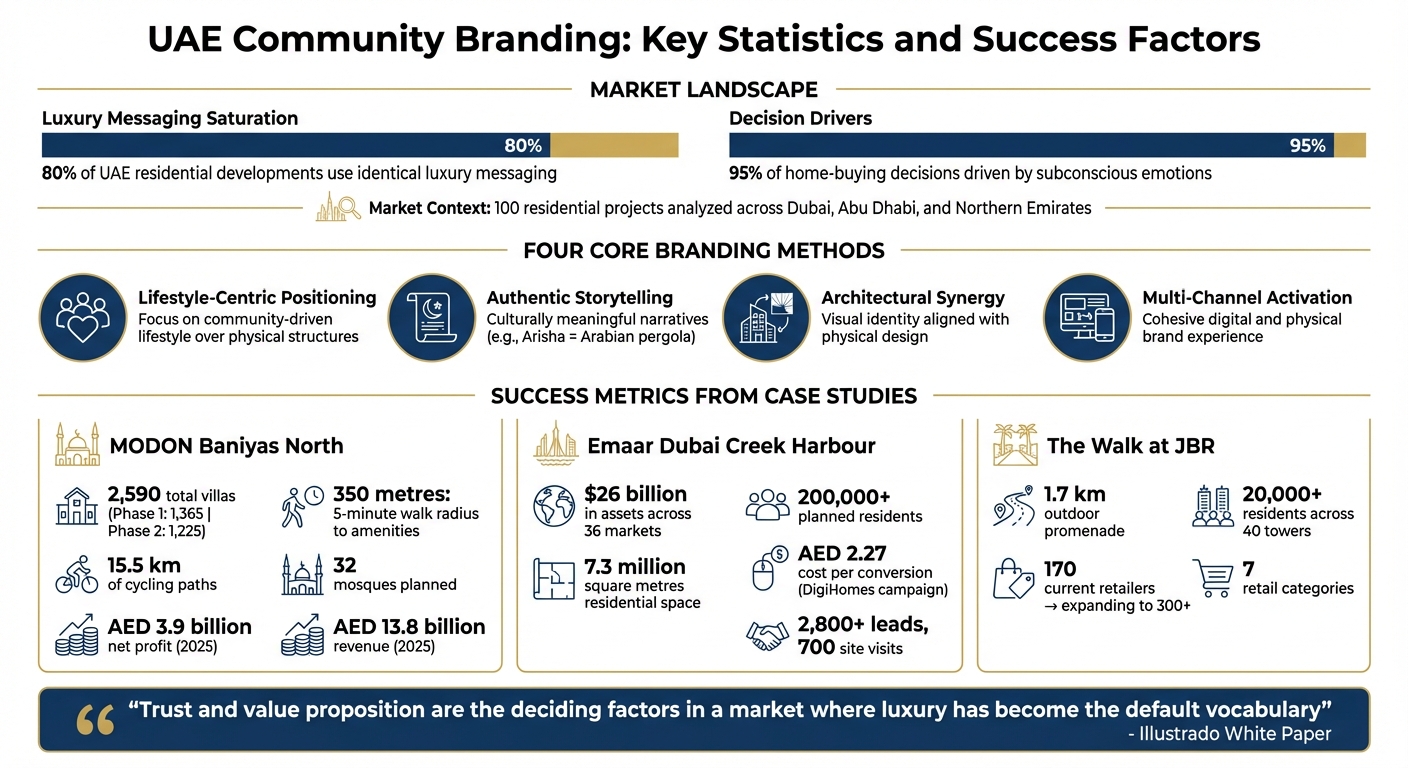
UAE Community Branding Statistics and Key Success Factors
Case Study 1: MODON Baniyas North – Experiential Design Approach
MODON Baniyas North shows how heritage-inspired storytelling can turn a residential community into a living, breathing brand experience. Situated on the eastern side of Abu Dhabi, this master-planned community blends traditional Emirati design with modern architecture, creating a space that feels like home for its residents. The project was launched in two phases: Phase 1 included 1,365 villas, while Phase 2 added 1,225 more. These villas range in size from 425 to 602 square metres, set on plots of approximately 1,080 square metres.
The design narrative is deeply rooted in cultural identity, brought to life through physical design features. Traditional elements like Sikka (alleyways) and Baraha (courtyards) have been reimagined as longitudinal gardens running through the community. These spaces encourage interaction and reflect the essence of Emirati traditions. The architecture features large windows and open layouts, merging timeless aesthetics with modern functionality.
This cultural storytelling weaves together the physical and digital aspects of the community, creating a seamless experience for residents.
Combining Physical and Digital Touchpoints
MODON’s approach focuses on crafting a pedestrian-friendly lifestyle across the development. The “5-minute walk” concept ensures all essential amenities and pedestrian pathways are within 350 metres of residential areas. This design encourages an active and connected way of life. Residents also benefit from 15.5 km of cycling paths and shaded walkways, making eco-friendly commuting both practical and enjoyable.
Each villa is equipped with smart home technology, blending traditional design with modern convenience. This integration of walkable spaces and intelligent systems creates daily touchpoints that enhance the resident experience. The community’s connection to local identity is further strengthened by its proximity to landmarks like the Zayed Agricultural Centre and Baniyas Sports and Cultural Centre. Additionally, 32 mosques are planned throughout the development, ensuring religious and communal spaces are central to daily life.
Aligning Design with Brand Values
Every design decision reflects MODON’s commitment to community and sustainability, aligning with the Ghadan 21 initiative. The project incorporates energy-efficient buildings and abundant green spaces, supporting the UAE’s broader vision for the future. Financially, this values-driven approach has proven successful, with MODON Holding reporting a net profit of AED 3.9 billion and revenue of AED 13.8 billion in 2025.
MODON’s branding goes beyond luxury. Taglines like “Where every view tells a story” and “Where water welcomes you” highlight the experiential nature of the development, positioning it as more than just a place to live. The strategic location near major highways (E11 and E22) and leisure destinations like Yas Island further enhances its appeal. Baniyas North is presented as a suburban retreat with urban connectivity – a promise delivered through tangible design features rather than abstract claims.
sbb-itb-6cae99a
Case Study 2: Emaar Properties – Emotional Connection and Digital Strategy
Emaar Properties has redefined residential investments by transforming them into aspirational lifestyle choices. With assets exceeding $26 billion across 36 markets, the company has perfected emotional branding. Rather than focusing solely on physical structures, Emaar promotes “future‑proof lifestyle offerings” that inspire buyers to imagine an elevated quality of life.
At the heart of Emaar’s branding lies its “Customer First” philosophy, which prioritises trust and delivering on promises. This approach nurtures strong emotional ties with residents. Each development is uniquely designed by analysing its location and understanding the preferences of its target audience. For instance, Dubai Creek Harbour, branded as “The World of Tomorrow”, is a visionary project designed to house over 200,000 residents across 7.3 million square metres of residential space.
Digital Storytelling Methods
Emaar amplifies its emotional branding through cutting-edge digital strategies. By combining interactive technology with aspirational messaging, the company creates powerful and memorable experiences. A standout example is the DigiHomes campaign, which featured voice-activated landing pages. Visitors could virtually explore smart home features by using commands like “illuminate” to turn on lights. This innovative approach attracted over 2,800 leads and 700 site visits, achieving a cost per conversion of just AED 2.27.
To support its digital-first initiatives, Emaar collaborated with Huawei to implement a 10G PON all‑optical network at Dubai Creek Harbour, spanning six square kilometres. This advanced infrastructure powers high-speed Wi-Fi, digital media for advertisements, and real-time live streaming, catering to a population of 450,000. By integrating technology seamlessly into daily life, Emaar strengthens its reputation for innovation and convenience.
Resident Content and Community Loyalty
Emaar ensures its brand remains consistent and authoritative across all digital platforms. To protect its identity, the company restricts unauthorised use of logos or destination names like “Emaar_Arabian_Ranches” on social media. This disciplined approach extends to its visual identity, where custom Arabic and English typefaces reflect a balance of modern aesthetics and cultural heritage, fostering national pride and belonging among UAE residents.
The physical design of Emaar’s developments also prioritises community engagement. For instance, Dubai Creek Harbour features open squares and parks that encourage movement and social interaction. Combined with robust digital connectivity, these spaces create opportunities for residents to connect authentically, strengthening community ties and enhancing the overall living experience.
Case Study 3: HIVE Coliv – Wellness and Sustainability Focus
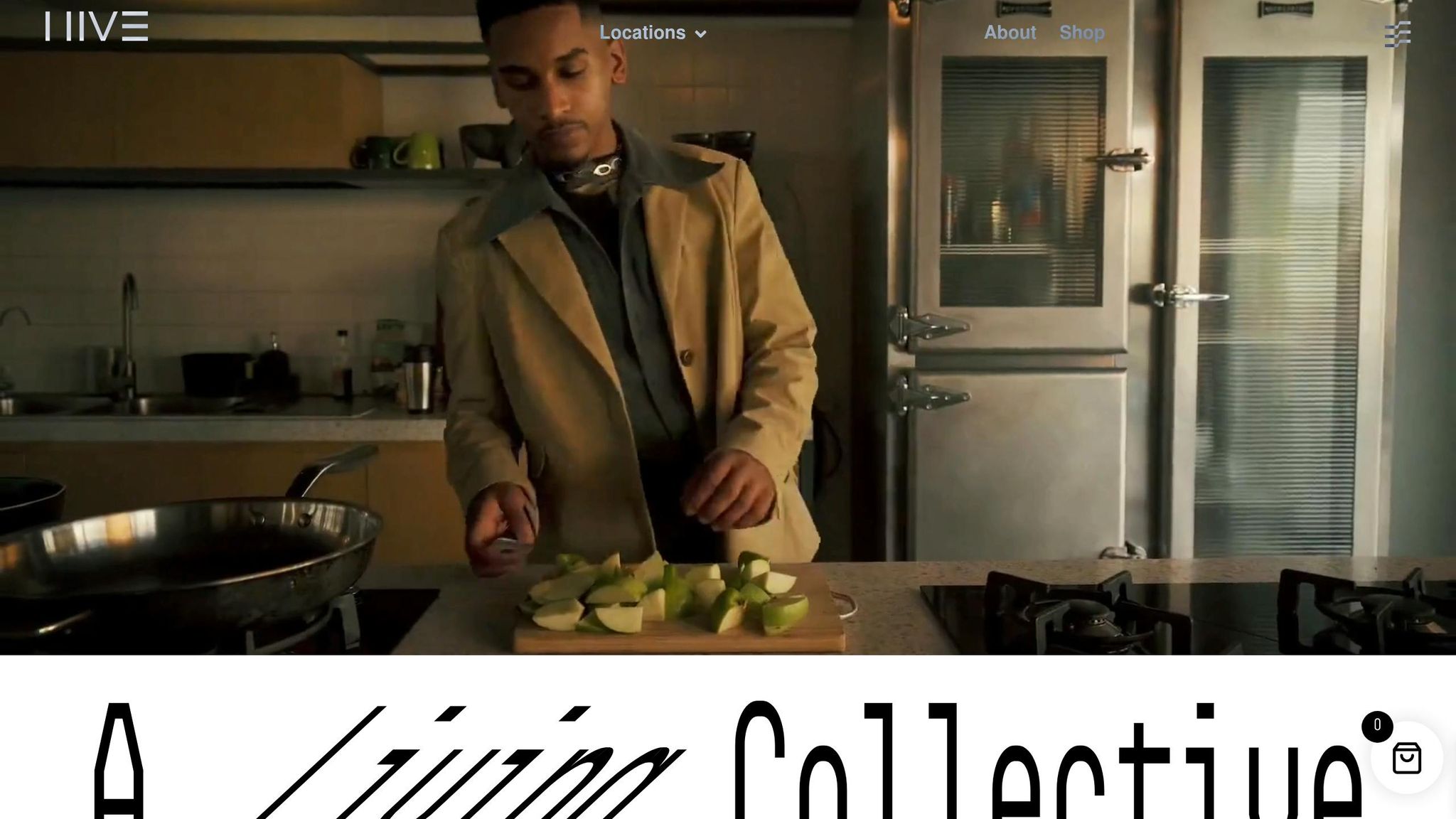
HIVE Coliv caters to young professionals looking for alternatives to traditional apartment living. Since its launch in Dubai in 2021, HIVE has expanded across prominent UAE locations like Jumeirah Village Circle, Abu Dhabi, Ras Al Khaimah, and even Riyadh. It offers a “Living Collective” concept that reshapes the idea of residential living.
The brand identity, designed by Utopia Agency, showcases this vision with intention. Its symmetrical logo, featuring rounded lines and a dynamic colour palette, symbolises balance, community, and the ever-evolving Dubai skyline. This design underscores HIVE’s commitment to fostering a connected and vibrant living experience.
Sustainability in Brand Messaging
HIVE promotes itself as an affordable and convenient coliving solution that resonates with young professionals while embracing sustainable urban living. The brand’s messaging highlights a seamless blend of living, working, and community. As HIVE puts it:
“We’re rethinking how living, working, and community flow together. Our residential spaces and thoughtful programming sit at the core of our community-driven approach, designed for those who thrive in a collective atmosphere where life feels seamless.”
This focus on sustainability goes beyond surface-level claims, offering real benefits through shared resources and optimised living spaces. By creating environments where residents can live, work, and socialise in one ecosystem, HIVE reduces the need for unnecessary commutes and excess resource use, all while keeping costs manageable. This integrated approach also opens the door to dynamic community events and interactions.
Communal Spaces in Branding
HIVE’s community identity is built on both physical spaces and thoughtfully designed programmes. For example, in April 2026, HIVE introduced “The Blend” event series at HIVE JVC. Highlights included “Letterforms with Motion” by Ibrahim Zaki on 16 April and “The Blend: Off The Ground” at Mountain Extreme, Al Quoz, on 26 April. These events combine wellness and creativity, seamlessly weaving them into the residential experience.
The brand also launched the “Apartment Pop Up Series” on 18 April 2026 at HIVE JVC, further enhancing its community focus. Digital initiatives, like a curated internet radio station and newsletters, extend this sense of connection. As HIVE explains:
“We shape environments differently, guided by the intention of bringing people together.”
This multi-layered approach turns HIVE into more than just a housing provider – it becomes a lifestyle platform. By fostering genuine connections among residents, HIVE strengthens its identity as a community-driven brand.
Case Study 4: The Walk at Jumeirah Beach Residence – Mixed-Use Community Hub
The Walk at Jumeirah Beach Residence (JBR) is a shining example of how mixed-use developments can combine community spaces with retail ecosystems. This 1.7 km outdoor promenade caters to over 20,000 residents across 40 towers, serving as both a functional neighbourhood hub and an upscale lifestyle destination. Blending retail, leisure, and essential services along a picturesque beachside setting, The Walk delivers what Dubai Retail describes as an “all-encompassing lifestyle” experience.
What sets The Walk apart is its ability to be both accessible and premium. The tagline “Everyone’s invited” captures this duality, offering a welcoming atmosphere while maintaining an elevated appeal through its carefully curated tenant mix and coastal vibe. This balance transforms the promenade into the heart of JBR, where residents can seamlessly combine daily errands with leisure and relaxation. Much like other successful projects, it demonstrates how thoughtful design and cultural programming can create a strong, recognisable brand identity.
Tenant Selection and Brand Mix
The Walk’s success lies in its carefully chosen tenant mix. Matthew Reay, Director of Mall Management at Dubai Retail, emphasised that selecting the right combination of retail and hospitality brands was a top priority during its development. Currently, the promenade features nearly 170 retailers, with plans to expand to over 300. These tenants span seven key categories: food and beverage, home furnishing, art galleries, apparel, health and cosmetics, jewellery, and sports.
The mix is designed to balance exclusivity with accessibility. High-end international names like Saks Fifth Avenue, Zadig et Voltaire, and Pierre Cardin share space with everyday favourites such as Starbucks, Five Guys, and Zaatar w Zeit. Local brands and cultural elements, including Al Jaber Gallery, Allo Beirut, and Café Bateel, add a distinctly UAE flavour. Beyond retail, essential services like British Orchard Nursery, Maple Bear Nursery, Polar Bear Dental Clinic, UFC Gym, and Rusty Veterinary cater to families, health enthusiasts, and pet owners alike. This thoughtful selection meets a wide range of consumer needs while fostering a strong sense of community.
Building Community Identity
The Walk enhances JBR’s overall appeal by positioning itself as an “ideal meeting place for friends and families,” as described on its official website. Its open-air design and proximity to the beach create a laid-back coastal vibe that sets it apart from traditional indoor malls.
Community engagement is a core focus, achieved through both digital and physical initiatives. For example, in August 2025, The Walk teamed up with the Tickit rewards app to offer customers spending AED 150 or more at participating outlets – like Five Guys, India Palace, and Texas Chicken – a chance to win AED 10,000 in reward points. Similarly, a November 2025 collaboration with Paul Arabia featured a social media contest, rewarding two winners with AED 250 vouchers. These campaigns help build a rewards-driven connection with visitors.
Seasonal programming also plays a major role in embedding The Walk into the lives of JBR residents. Events like the Ramadan tent “Hala Walla” and Emirati Women’s Day celebrations turn the promenade into a venue for cultural and social gatherings. By hosting these events, The Walk becomes more than just a shopping destination – it evolves into a community hub and a natural meeting place for the people of JBR.
Key Takeaways: What Makes Community Branding Work
Core Community Branding Methods
Case studies highlight four effective methods for community branding. First, lifestyle-centric positioning shifts the focus from physical structures to promoting a genuine, community-driven lifestyle. Second, authentic storytelling employs culturally meaningful names like Arisha (an Arabian pergola) to create a sense of belonging, steering away from generic luxury claims. Third, architectural synergy ensures that a community’s visual identity aligns seamlessly with its physical design – think cascading forms or stone facades that reflect a unique character. Finally, multi-channel activation brings the brand to life across both digital and physical platforms, ensuring a cohesive and immersive community experience.
In the UAE, where 80% of 100 residential projects rely on similar luxury-coded language, trust has emerged as the deciding factor. According to the Illustrado White Paper, luxury has become the “default vocabulary of aspiration” in Dubai, Abu Dhabi, and the Northern Emirates. With premium signals becoming increasingly uniform, trust and a clear value proposition now hold the key to attracting investors and residents.
These methods pave the way for actionable insights that developers can adopt.
Practical Lessons for Developers
Developers can build on these methods to redefine premium branding in the UAE. The first step is to clearly define what “premium” means for their specific project, rather than echoing overused luxury clichés. The example of Arisha Terraces underscores the importance of aligning a brand’s narrative with the values and aspirations of its community.
“The next phase of leadership will belong to those who define what premium truly stands for, not those who simply repeat it.” – Illustrado White Paper
Another critical strategy is identifying “white spaces” in the market – underutilised positioning opportunities that allow projects to break free from the “safe luxury trap.” Developers must also connect their brand story to the emotional experiences of the community. It’s not just about listing features; it’s about showing how residents will feel. Finally, blending physical architecture with digital storytelling – through platforms like websites, brochures, and even cultural programming – turns a brand into a true guardian of local identity, rooted in shared traditions like Ramadan or National Day.
Conclusion: Building Better Communities Through Branding
Branding that focuses on community has moved from being an afterthought to a critical strategy for residential developers in the UAE. In a market flooded with similar luxury narratives, the ability to create authentic emotional connections sets apart projects that thrive from those that fade into the background. Developers are now stepping into the role of storytellers, embedding local authenticity into every element of their projects.
This approach has proven successful in recent developments, where integrating cultural relevance has resonated deeply with buyers. By embracing values central to the GCC’s collectivist culture – such as family, heritage, and belonging – developers are not just constructing buildings but creating meaningful connections. Cultural understanding has become a cornerstone of commercial success.
The focus has shifted from simply making sales to building loyalty through identity. Branding is no longer just about visuals or slogans; it’s an emotional commitment. By blending thoughtful physical design with engaging digital storytelling – whether through carefully curated lobby experiences or compelling social media campaigns – developers craft environments that residents are proud to promote. With trust and peer recommendations playing a significant role in purchasing decisions, this community-driven branding becomes a key factor in success.
Developers are also embracing their responsibility as stewards of local heritage. The UAE’s rapid transformation, from pearl-diving villages to global urban hubs in less than half a century, makes preserving cultural roots essential. Those who incorporate local traditions – whether through native landscaping, reimagined majlis spaces, or initiatives aligned with UAE Centennial 2071 – position themselves as true guardians of the nation’s identity. This blend of heritage and innovation ensures their projects resonate deeply with both current and future generations.
FAQs
How do you find a real brand “white space” in the UAE market?
To uncover untapped opportunities in the UAE’s real estate market, it’s essential to focus on areas or strategies that remain underrepresented. Many developments lean heavily on luxury themes, which often results in a sense of “luxury sameness” – projects that fail to stand out in a crowded market.
Instead, consider shifting the narrative. Embrace authentic, lifestyle-focused approaches that create emotional connections with potential buyers or renters. This could mean targeting emerging neighbourhoods or catering to specific lifestyle segments that are currently underserved.
By emphasising elements like community living, environmentally conscious practices, or aspects of local culture, developers can craft a brand identity that feels distinctive and resonates with a broader audience.
What branding metrics show community branding is working?
Effective community branding hinges on a few key elements: developing a clear and strong brand positioning, crafting genuine storytelling, and maintaining a unified visual identity. Success is often reflected in high-quality content that connects with both residents and investors. For example, projects like Arisha Terraces and Rising Sharjah showcase how impactful branding can resonate with diverse audiences.
How can developers blend heritage with smart tech without feeling fake?
Developers have a unique opportunity to merge heritage and modern technology in ways that feel both genuine and forward-thinking. By weaving traditional design elements or storytelling into digital platforms, they can preserve a sense of authenticity while embracing innovation. For example, integrating IoT-enabled amenities or eco-conscious technologies into living spaces can elevate everyday experiences, all while honouring cultural roots. The secret lies in making technology an enhancer of lifestyle – one that respects and complements heritage, fostering a sense of connection and pride within the community.
Related Blog Posts

BRAND HUSL
We’re a collective of brand strategists, designers, and unapologetic truth-tellers who’ve spent over two decades turning chaos into clarity for businesses across the globe. From global names to fearless startups, we’ve built brands that stick, scale, and sell—without the fluff. Everything we create is rooted in strategy, storytelling, and ROI, because good branding isn’t just pretty—it’s powerful.