

Your brand’s voice defines how customers perceive and trust your business. In a diverse market like the UAE, consistency in communication is key to building a strong identity. This guide breaks down five clear steps to help you create a voice and tone that resonate with your audience across platforms while respecting local values and traditions. Here’s a quick summary:
- Review Current Communications: Identify inconsistencies in your messaging across platforms like social media, emails, and customer service.
- Choose Core Personality Traits: Define 3–5 traits that represent your brand, ensuring they align with UAE cultural expectations.
- Understand Your Audience: Create detailed profiles of your target audience, considering their preferences, languages, and cultural sensitivities.
- Differentiate Voice from Tone: Maintain a consistent voice while adjusting your tone for different platforms and situations.
- Write Guidelines: Document your voice and tone rules to ensure consistency across teams and channels.
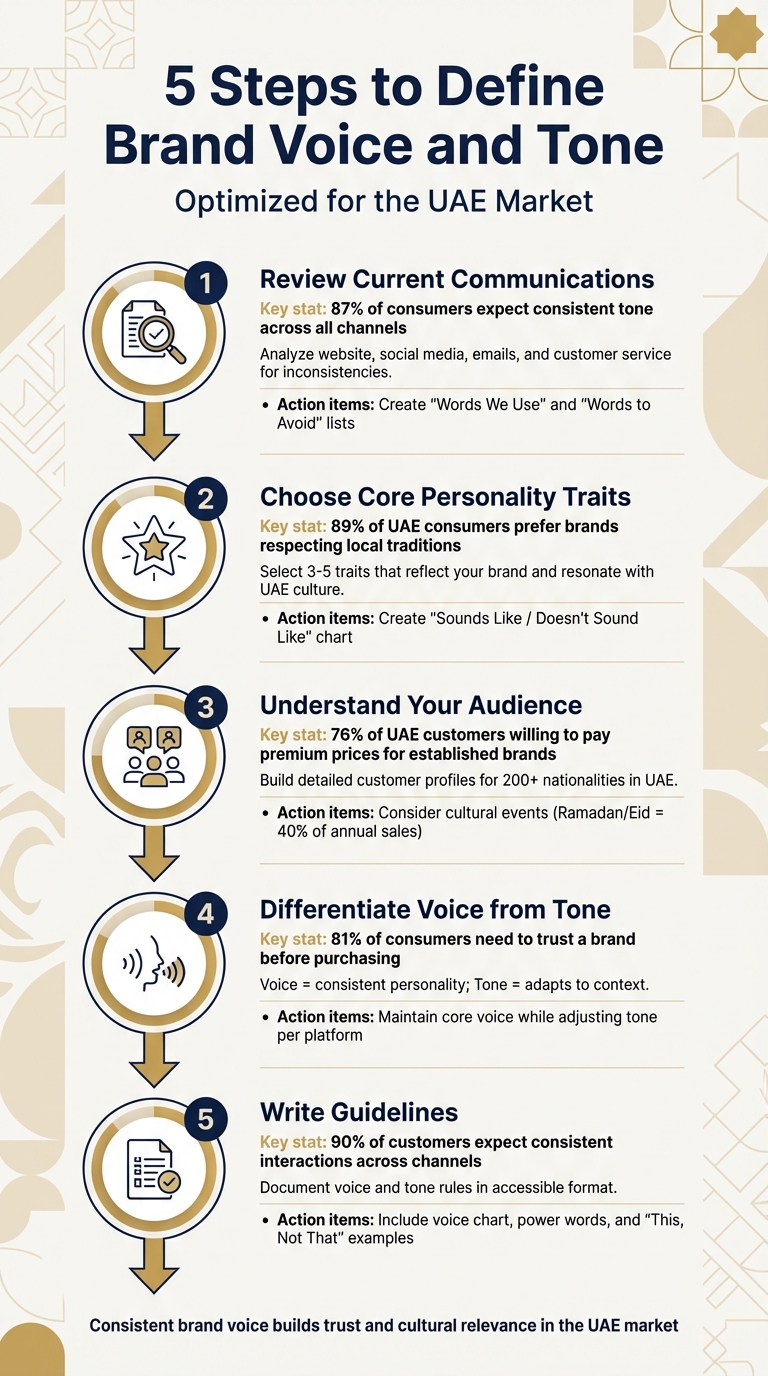
5 Steps to Define Brand Voice and Tone for UAE Market
Step 1: Review Your Current Communications
Start by taking a close look at how your brand communicates today. Collect examples from your website, social media, emails, customer service scripts, product packaging, signage, and promotional materials. The aim is to identify patterns, spot inconsistencies, and determine if your messaging aligns with your brand’s values.
Did you know that 87% of consumers expect a consistent tone and brand experience across all channels? Yet, many UAE businesses face challenges in achieving this. For instance, your Instagram captions might come across as fun and casual, but your customer service emails could feel stiff and overly formal. This lack of alignment can confuse your audience and erode trust.
Identify Strengths and Weaknesses
Take a deep dive into at least ten key areas where your brand communicates with customers. These might include:
- Website homepage
- Blog posts
- Social media captions
- Email campaigns
- Customer service responses
- Sales presentations
- Paid ads
- Product descriptions
- Video scripts
- Microcopy (like error messages, button labels, and tooltips)
For each, ask yourself: Is the tone formal or casual? Does it come across as serious or playful? Is it enthusiastic or neutral? These details matter because even small inconsistencies can send mixed signals about your brand.
Create two lists to guide your review: one for “Words We Use” and another for “Words to Avoid.” For example, if you want your brand to feel welcoming, but your messaging is filled with corporate jargon, that’s a clear disconnect. These lists will help you weed out language that doesn’t fit your brand personality.
Leverage Team Feedback
Your customer-facing teams – like sales and customer support – are goldmines of insight. These team members interact with your audience daily and know which phrases resonate and which ones don’t. In fact, 88% of marketers agree that brand language plays a key role in connecting with customers, so their input is invaluable.
Have conversations with these teams. Ask questions like: What are the most common customer queries? Which messages excite customers? Where do they seem confused or frustrated? These insights can uncover issues you might miss during an internal review.
You could also form a cross-functional group with members from marketing, sales, customer service, and product teams. This team can review high-profile content together, ensuring everyone works towards a unified voice.
Armed with this knowledge, you’ll be ready to define the personality traits that shape your brand voice in Step 2.
sbb-itb-6cae99a
Step 2: Choose Your Core Personality Traits
To shape your brand’s identity in a way that truly connects with the UAE market, focus on selecting three to five personality traits that reflect your brand’s essence. These traits should not only define your brand but also resonate with the cultural and social norms of the region.
Imagine your brand as a person. Would they come across as professional yet approachable, innovative while honouring tradition, or luxurious and refined? The goal is to move beyond generic qualities and identify traits that are specific and actionable.
Connect Brand Values to Personality
Start by looking at your brand’s core values and mission. For example, if innovation is a key value, traits like “visionary” or “forward-thinking” could be a natural fit. If your focus is on exceptional customer service, you might lean towards traits like “empathetic” or “supportive.”
A helpful exercise is the “Saturday Afternoon” test. Ask yourself: What would your brand do on a typical Saturday afternoon? This can clarify whether traits like “sophisticated” or “creative” align with your brand’s personality.
To avoid any misinterpretation, create a “Sounds Like / Doesn’t Sound Like” chart for each selected trait. For instance, if “encouraging” is one of your traits, it might sound like a trusted mentor offering practical advice. However, it wouldn’t sound like someone giving vague or overly enthusiastic compliments. This approach ensures your team can consistently apply these traits across all brand content.
Match UAE Market Expectations
The UAE market has its own unique preferences and cultural nuances, which should guide your choice of personality traits. For instance, 89% of UAE consumers prefer brands that respect local traditions and Islamic values, while 78% of GCC consumers prioritise brand reputation when making purchasing decisions. This means your traits must strike a balance between modernity and cultural sensitivity.
“In the UAE, your brand isn’t what you say it is – it’s what the market believes it to be. What will they believe about you?” – Carril Agency
Positioning your brand on the spectrum of heritage versus modernity is essential. For instance, tech and luxury brands often adopt a more international tone, while food and beverage or service brands may benefit from a locally rooted image. A strong combination for many UAE brands is an authoritative yet approachable tone – one that is professional without being distant and knowledgeable without being overbearing.
If your brand communicates in both Arabic and English, ensure your chosen traits translate well across languages. Traits that rely heavily on casualness or humour often don’t resonate culturally. Instead, focus on qualities like “trustworthy”, “premium”, or “relationship-focused.” Keep in mind that 83% of UAE consumers favour brands that demonstrate cultural relevance, so your traits should reflect an understanding of local values rather than just global trends.
| Trait Category | UAE Market Expectation | Tip |
|---|---|---|
| Formality | High (especially in B2B) | Use respectful, polished language; avoid overly casual tones common in Western markets |
| Visuals | Premium/Luxury | Incorporate design elements like gold accents, sand tones, or Arabic calligraphy |
| Values | Balance of Tradition and Innovation | Align with initiatives like “Vision 2030” or the UAE’s goals for economic diversification |
| Communication | Relationship-focused | Build trust through reputation and word-of-mouth rather than relying solely on direct advertising |
Step 3: Understand Your Audience and Context
Your brand voice must connect with a clearly defined audience. In the UAE, this can be a challenge since you’re addressing over 200 nationalities while also respecting the Emirati identity, which is at the heart of the nation’s culture. To do this effectively, you need to ensure every message aligns with the diverse expectations of your audience. This requires more than just basic demographics – it means creating detailed customer profiles.
Create Customer Profiles
Building accurate customer profiles is essential to understanding the UAE’s diverse audience. These profiles should include demographics, communication preferences, and cultural sensitivities. For example, does your audience expect premium presentation even for everyday products? Research highlights that 76% of UAE customers are willing to pay premium prices for products from well-established brands, so your voice must immediately convey a sense of quality.
Another vital aspect is the expat-local dynamic. An Emirati professional in Dubai may resonate with different cultural cues than a British expat, yet both expect brands to respect local traditions. Consumers in the UAE favour businesses that weave cultural respect into every interaction. Your profiles should also reflect language preferences – whether your audience expects communication in Arabic, English, or a seamless mix of both.
Timing is another crucial factor. Cultural events like Ramadan and Eid contribute up to 40% of annual sales for many UAE brands. Understanding how your audience engages during these key periods is critical. Additionally, events like the Dubai Shopping Festival and UAE National Day significantly influence shopping behaviours. Incorporate these patterns into your profiles to better align your messaging with their expectations.
Once you have clear profiles, adapt your tone to fit the context of each communication channel.
Adjust Your Style for Different Platforms
Using these profiles, fine-tune your tone to suit each platform’s specific audience. Your brand voice remains consistent, but your tone should shift depending on the medium. For example, a professional and formal tone works best for LinkedIn posts or business proposals in B2B settings. On platforms like Instagram or WhatsApp, a conversational tone is more effective – as long as it respects cultural boundaries.
With 92% of MENA consumers researching brands online before making a purchase, your website must strike a balance between professionalism and approachability. On the other hand, WhatsApp storefronts, which are growing in popularity for social commerce in the UAE, require clear, helpful communication that feels personal but still aligns with your brand voice. Avoid directly translating Western casualness into Arabic contexts, as it can come across as disrespectful instead of friendly.
Step 4: Understand the Difference Between Voice and Tone
To communicate effectively, it’s essential to grasp the distinction between voice and tone. While they might seem similar, they serve different purposes. Voice is your brand’s personality – it stays consistent no matter the situation. Tone, on the other hand, adapts – it reflects how you adjust your communication style depending on the context. This distinction is particularly important in the UAE, where 81% of consumers need to trust a brand before making a purchase. Mixed messages can lead to confusion, and a confused customer is unlikely to buy.
Voice: Your Brand’s Core Identity
Your brand voice is like its DNA – unchanging and present in every interaction, whether it’s a social media post or a formal business proposal. It represents the core traits that define your brand’s personality and how you want to be perceived.
For instance, if your voice is “professional and innovative”, that essence should shine through in everything you do. Take a high-end real estate brand in Dubai as an example. Their voice remains sophisticated whether they’re promoting a luxury villa on Instagram or responding to a client query on WhatsApp. Consistency in voice builds trust and reinforces your identity over time.
Once your voice is firmly established, the next step is to tailor your tone to suit different situations.
Tone: Shaping the Message for the Moment
While your voice stays constant, tone is your tool for adapting to specific scenarios, audiences, and platforms. It’s the emotional layer of your communication – the mood or attitude you convey. A brand with a professional voice might use an upbeat tone to celebrate a new product launch during the Dubai Shopping Festival but switch to a calm and empathetic tone when resolving a customer issue. The voice remains professional; the tone adjusts to meet the moment.
In the UAE market, tone flexibility is key. On LinkedIn, for example, you might opt for a formal, authoritative tone to engage with B2B audiences. During Ramadan, your tone on Instagram Stories might shift to something warmer and more community-focused, reflecting the spirit of the season. If there’s a service disruption, your tone should become urgent and accountable while still aligning with your brand’s voice – whether that’s transparent, caring, or solutions-driven. This adaptability ensures your brand resonates with your audience and avoids missteps, which is critical, as 90% of consumers place a high value on brand trust.
Step 5: Write Your Brand Voice and Tone Guidelines
Once you’ve defined your brand’s voice and tone, the next step is to document them in clear, actionable guidelines. Without a written framework, your brand voice risks becoming inconsistent, especially when multiple people or external partners are involved. A single, structured document ensures everyone communicates in the same way, which is particularly important in the UAE, where businesses often collaborate with external teams.
What to Include in Your Guidelines
Keep your guidelines straightforward and easy to follow. Start by listing 3–5 core personality traits that define your brand’s voice. For each trait, provide a short description and explain why it matters. For example, if your brand is “Reliable”, you might describe it as “We deliver on our promises, always.” This clarity helps writers understand the essence behind each trait. Most brands stick to five traits or fewer to keep things manageable and memorable.
Next, include a voice chart. This can be a four-column table with the headings: Trait, Description, Do’s, and Don’ts. For instance, if a trait is “Confident”, the description might read, “We speak with authority and expertise.” Under Do’s, you could include tips like “Use clear, direct language”, while under Don’ts, you might caution against phrases like “maybe” or “we think.” This format provides concrete guidance and reduces guesswork for your team.
You should also outline how your tone adjusts based on the context. For example, your tone for customer support might be empathetic, while your tone for social media could lean more casual. In the UAE, this could mean adopting a warm, inclusive tone for Ramadan campaigns or a more formal approach for LinkedIn posts aimed at B2B audiences. Additionally, create a list of 15–20 approved power words and another list of words to avoid. Keeping these lists concise ensures they’re easy to remember.
Lastly, provide “This, Not That” examples. These are side-by-side comparisons of on-brand and off-brand phrasing. For instance, if your voice is professional yet approachable, you might compare “We’re here to help you succeed” (on-brand) with “Feel free to reach out if you need us” (off-brand, as it sounds too passive). Real-world examples like these make it easier for your team to understand how to stay consistent. A great example is the 2025 case study of Mary Louise Cosmetics, which saw a 93% revenue growth and a 144% increase in attributed revenue by refining their brand voice.
How to Apply Your Guidelines
Having guidelines is just the first step – consistent application is what brings them to life. Store the document in a shared location, such as a central drive, so it’s easily accessible to everyone. Make it a key part of onboarding for new team members to ensure they understand and align with your communication style from the start. Regularly update the guidelines – ideally once a year – to keep up with changes in your brand and the UAE market.
To maintain alignment, consider hosting workshops or monthly team discussions to review the guidelines and address any updates. When working with freelancers or external agencies, share the document upfront to ensure they represent your brand accurately. For expert assistance, platforms like Brand Husl specialise in creating verbal brand identities and ensuring consistent execution across all channels.
Conclusion
Shaping your brand voice and tone requires an ongoing commitment to maintaining clarity and consistency. By analysing your current communication, selecting core personality traits, understanding your audience, distinguishing between voice and tone, and documenting clear guidelines, you lay the groundwork for a strong brand identity.
These five steps are essential for building a reliable and culturally-aware brand. In the UAE market, where 90% of customers expect consistent interactions across all channels, this approach is crucial. A well-defined brand voice not only sets you apart but also ensures local relevance. For instance, aligning messaging with cultural moments – like Ramadan campaigns – can create a powerful connection with your audience. A great example is the 2025 campaign by Unilever’s Comfort brand, which resonated deeply in the UAE and Saudi Arabia. Their culturally-aware campaign earned the top spot in Amazon’s health category for new releases and boosted unit sales by 19%. In the UAE, every interaction – whether tied to cultural events or daily engagements – matters immensely.
Consistent communication does more than reinforce your brand identity; it strengthens customer trust.
“It builds trust in your consumers and customers if they feel like you have a clear, consistent point of view.” – Ky Allport, Creative Director, Outline
Successful brands know who they are and stay true to that identity. Trying to appeal to everyone can weaken your message and dilute your impact. Instead, focus on maintaining your core personality across all platforms while adapting your tone to fit specific situations – whether it’s empathetic customer service or engaging social media posts.
As you refine your brand’s verbal identity, consider seeking expert guidance. Brand Husl offers tailored branding services, blending strategy, design, and implementation to meet the unique needs of the UAE market.
FAQs
How do I choose the right 3–5 brand traits?
To identify the best 3–5 traits for your brand, start by pinpointing the key qualities that represent your values and connect with your audience. Traits such as friendly, authoritative, or professional should align with your brand’s identity and remain consistent in all forms of communication. You can use frameworks like formal vs. casual or serious vs. playful to fine-tune these traits, ensuring your brand voice is clear and well-defined.
How do I maintain a consistent voice in Arabic and English?
To maintain a consistent brand voice in both Arabic and English, it’s essential to create detailed guidelines that address tone, language, and core values for each language. A well-crafted multilingual style guide can serve as a reference to ensure consistency during translations and localisation efforts.
Make it a priority to regularly review your messaging to ensure it aligns with your brand identity in both languages. Additionally, invest in training your team to apply the brand voice effectively, while being mindful of the cultural and linguistic differences that may influence how the message is received. This approach ensures that your brand resonates authentically with diverse audiences.
How can I make my tone fit each channel without drifting off-brand?
To ensure your brand’s personality resonates across different platforms, it’s essential to establish clear guidelines for communication. While your voice should remain consistent, the tone can be adjusted to suit the unique audience of each channel.
Here’s how to make it happen:
- Define your voice: Pin down the core traits of your brand’s personality. Is it friendly? Professional? Quirky? This will serve as the foundation for all communication.
- Tailor the tone: Adapt how you express that voice depending on the platform. For instance, a formal tone might work well on LinkedIn, while a more casual approach could be better suited for Instagram.
- Train your team: Equip everyone involved in content creation with these guidelines, so your messaging stays aligned across the board.
- Review regularly: Periodically check your content to ensure it mirrors your brand identity while feeling genuine and relatable.
By fine-tuning your tone for each platform while staying true to your brand, you’ll connect more effectively with diverse audiences without compromising authenticity.
Related Blog Posts

BRAND HUSL
We’re a collective of brand strategists, designers, and unapologetic truth-tellers who’ve spent over two decades turning chaos into clarity for businesses across the globe. From global names to fearless startups, we’ve built brands that stick, scale, and sell—without the fluff. Everything we create is rooted in strategy, storytelling, and ROI, because good branding isn’t just pretty—it’s powerful.