

In wealth management, trust is everything. Visual branding plays a key role in shaping how clients perceive your firm’s credibility and professionalism. For firms in the UAE, aligning visuals with local values, cultural nuances, and market trends is critical.
Here’s what you need to know:
- Visuals must reflect UAE values: Use imagery that resonates with local demographics and avoids generic, Western-centric stock photos.
- Align with UAE goals: Highlight themes like cashless payments (Dubai’s 2026 cashless goal) and sustainability (Net Zero 2050 initiative).
- Consistency matters: Unified colours, fonts, and styles across all platforms can boost recognition and client confidence.
- Colour choices influence perception: Blue conveys trust, green reflects prosperity, and gold signals prestige. Avoid overusing red.
- Typography should match your audience: Serif fonts emphasize tradition, while sans-serif fonts appeal to modern, younger clients.
To succeed in the UAE market, your visual branding must go beyond aesthetics – it should communicate stability, expertise, and an understanding of client needs.
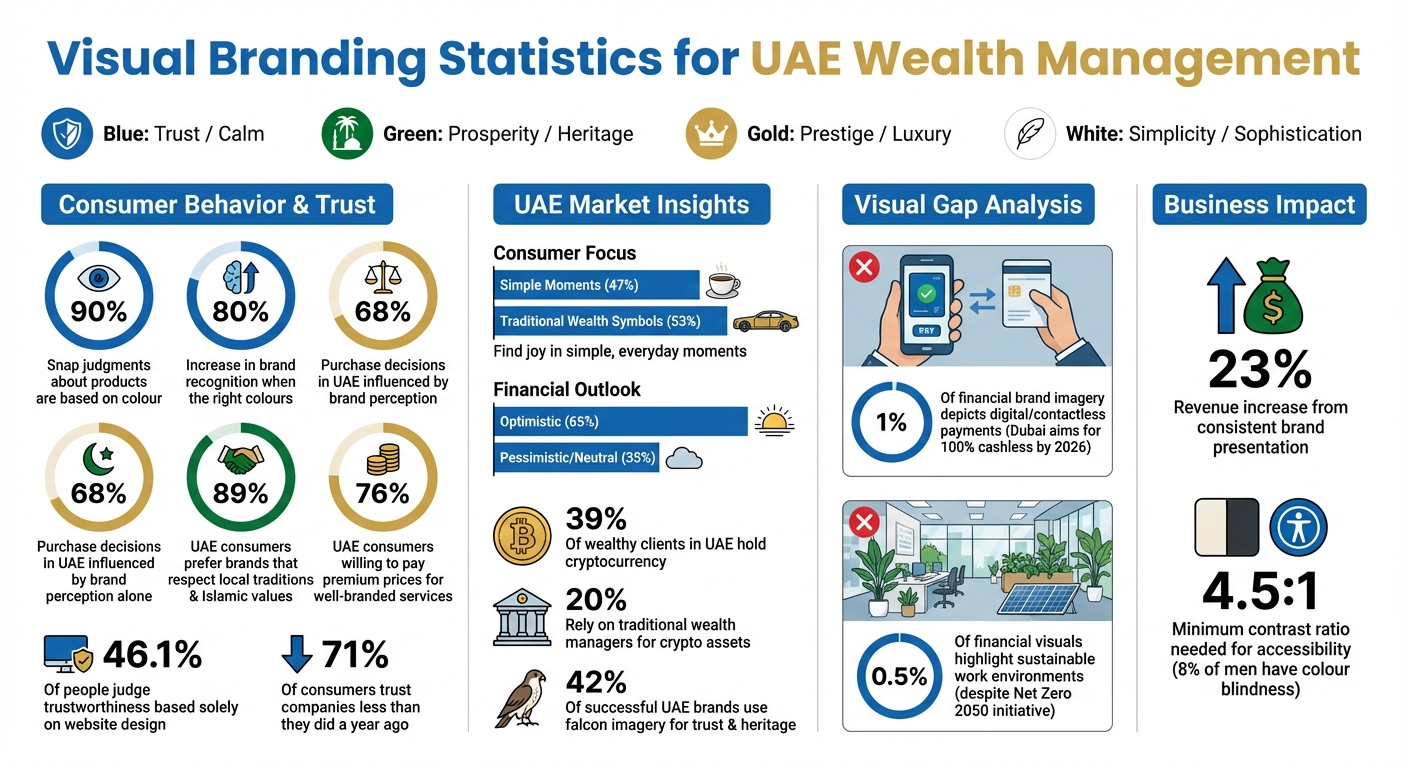
Visual Branding Statistics for UAE Wealth Management Firms
Why Trust Matters in Wealth Management
Trust is the bridge between residency and assets under management. While many ultra-high-net-worth families are relocating to the UAE, their core portfolios often remain in global financial hubs like London, Zurich, or Singapore. This disconnect isn’t just a marketing hurdle – it’s a matter of credibility and service quality. As highlighted at WealthTHINK Middle East 2025:
"Assets lag arrivals. Residency brings people first and portfolios later. Trust, governance and continuity close the gap."
However, optimism alone doesn’t guarantee local mandates. These families demand more than promises – they want proof of institutional depth, consistent processes, and governance frameworks that endure beyond individual relationships. A single relationship manager, no matter how capable, won’t suffice. Firms need to demonstrate layered expertise and structured systems to assure clients their wealth is managed with long-term discipline.
The stakes are high. A participant at WealthTHINK Middle East 2025 cautioned:
"One market downturn could reset expectations overnight."
When markets shift, clients scrutinise every detail, including whether your branding reflects the professionalism you claim. Overused stock photos – like generic handshakes – fail to convey the robust governance and conflict controls that sophisticated families expect. Instead, visuals must project institutional strength and align with local cultural sensitivities.
How Visuals Create Emotional Connections
Visuals play a crucial role in bridging the trust gap by evoking emotional connections. In wealth management, where decisions often involve generational planning and cross-border complexities, emotional reassurance is just as important as technical expertise. The challenge lies in moving away from transactional imagery – like a hand holding a smartphone – and towards visuals that tell stories about the human impact of sound financial planning.
In September 2025, Getty Images launched a creative initiative in Jumeirah Village Circle, Dubai, to address the shortage of authentic financial imagery in the region. Led by Creative Content Manager Amal Elgadi, the project captured UAE residents and citizens in natural, warm interactions at local cafés, showcasing cashless payments and community-focused lifestyles. The aim was to shift the narrative from product-centric imagery to visuals that highlight the emotional rewards of financial security – time with loved ones, community engagement, and confidence in the future.
Amal Elgadi explained:
"Aligning with these insights enables brands to build trust and stay culturally relevant."
This approach reflects a key insight: 47% of UAE consumers find joy in simple, everyday moments rather than traditional symbols of wealth. Images celebrating coffee culture, neighbourhood interactions, and family time resonate far more than generic corporate visuals. When clients see themselves represented in your branding – not as distant aspirational figures but as real people facing genuine financial decisions – trust naturally begins to build.
Adapting Visuals for UAE Audiences
Building trust requires visuals that genuinely resonate with local audiences and reflect UAE values. The visual landscape in the UAE is evolving rapidly. For instance, Dubai is set to become a fully cashless society by 2026, yet only 1% of financial brand imagery currently depicts digital or contactless payments. Similarly, despite the country’s Net Zero 2050 initiative, just 0.5% of financial visuals highlight sustainable work environments. This disconnect can make firms appear out of sync with the UAE’s strategic goals.
Authenticity in representation is equally important. Financial imagery in the UAE often over-relies on young Caucasian models, missing the opportunity to reflect the region’s actual demographics. Families navigating wealth decisions – such as insurance structures, cross-border liquidity, and estate planning – want to see professionals and clients who mirror the UAE’s diversity, including Emirati families, long-term Arab residents, and South Asian and African communities that are integral to the economy.
Cultural sensitivity also extends to governance. For many UAE families, trust is rooted in frameworks that respect Sharia principles while incorporating common-law tools. Branding needs to reflect this dual approach – modern professionalism paired with respect for traditional values. As one participant at WealthTHINK Middle East 2025 observed:
"The measure of success is not a binder of documents. It is whether a sudden event can be handled without chaos."
To close the trust gap, visuals must convey institutional strength, transparency, and cultural awareness. This means replacing generic green spaces or non-local settings with authentic UAE environments – like souks, community parks, or collaborative workspaces in Dubai’s business hubs. When your branding reflects the real lifestyles and values of your clients, it shows you understand not just their portfolios, but their lives.
sbb-itb-6cae99a
Visual Elements That Build Trust
The right visual elements can make all the difference in how your audience perceives your firm. These components help translate your expertise into a credible and approachable image. Among these, colour, typography, and consistency stand out as key pillars in shaping trust and professionalism.
Colour Choices and Their Impact
Colour has a powerful influence on emotions, often triggering reactions even before conscious thought kicks in. Studies reveal that 90% of snap judgements about products are based on colour, and using the right colours can boost brand recognition by up to 80%. For wealth management firms in the UAE, colour selection carries both psychological and cultural significance.
- Blue is a go-to choice in the financial sector. It’s known to promote calm and trust by physiologically lowering heart rate and blood pressure. This is why brands like PayPal and American Express rely on blue to convey security and stability.
- Green holds deep cultural value in the GCC, symbolising prosperity, heritage, and strength. Emirates NBD’s green branding taps into these associations, resonating strongly with local clients.
- Gold, especially when paired with black, exudes exclusivity and prestige. Dubai Expo VIP campaigns used this combination to appeal to high-net-worth individuals, creating a sense of luxury.
- White communicates simplicity and sophistication. Apple’s UAE stores, with their clean white interiors, reflect both modernity and the purity linked to traditional Emirati attire.
On the flip side, avoid using red as a dominant colour in wealth management branding. It can increase heart rates and evoke a sense of risk or instability. If red is necessary, limit its use to small elements like call-to-action buttons. Also, ensure accessibility by maintaining a minimum contrast ratio of 4.5:1, as 8% of men experience colour blindness.
Once your colour palette is established, typography becomes the next essential step in reinforcing your brand’s image.
Choosing Typography That Works
The fonts you use send an immediate message about your firm’s personality. Serif fonts, with their decorative flourishes, evoke tradition and authority, making them ideal for firms focused on heritage and long-term stability. On the other hand, sans-serif fonts deliver a clean, modern look that appeals to younger, tech-savvy clients.
The key is aligning your font choice with your audience. For example:
- If your firm caters to multi-generational families with deep regional ties, a serif font can emphasise continuity and respect for tradition.
- If your focus is on entrepreneurs or younger wealth creators, a sans-serif font signals innovation and efficiency.
Above all, prioritise readability. Fonts that are overly decorative or tightly spaced may stand out visually but can frustrate clients if they are hard to read. Typography should enhance your message, not distract from it.
The Importance of Visual Consistency
Consistency is the glue that holds your visual identity together. Whether clients are browsing your website, reading a brochure, or visiting your office, they should see the same colours, fonts, and overall style. Research shows that consistent brand presentation can increase revenue by 23%, underlining its importance.
Inconsistent visuals, on the other hand, can send mixed signals. If your branding looks fragmented, clients may question whether your internal processes are just as disorganised.
To maintain consistency:
- Document your brand’s exact colour codes (HEX, RGB, CMYK, Pantone), font styles, and logo usage in a detailed style guide.
- Centralise all approved branding assets in a digital library to ensure every team member has access to the same materials.
- Conduct quarterly audits to identify and fix any inconsistencies before they affect client perceptions.
How to Create Trust-Building Visuals
In wealth management, trust is everything. Every visual element you use should reinforce your credibility and reliability. Building trust through visuals requires a clear and deliberate approach: evaluate your brand, define a strong vision, and execute consistently.
Step 1: Review Your Current Brand
Start by auditing your current visual assets. Look for strengths and weaknesses across all channels. Is your logo consistent? Are your colours and fonts uniform? Inconsistent branding can come across as disorganised – a perception you definitely want to avoid in wealth management.
Next, consider cultural relevance. In the UAE, 89% of consumers prefer brands that respect local traditions and Islamic values. This means your visuals should strike the right balance between Arabic and English, use imagery that resonates locally, and reflect the region’s context. Stay away from generic Western stock photos or poorly translated Arabic, as these can damage credibility.
Also, check if your visuals highlight trust signals. Do you prominently display verification badges, regulatory credentials (like DED registration), or client testimonials? These elements can instantly boost credibility. Keep in mind that 68% of purchase decisions in the UAE are influenced by brand perception alone. To stay on track, conduct quarterly brand recall studies to ensure your target audience recognises and remembers your brand identity.
"In the UAE, your brand isn’t what you say it is – it’s what the market believes it to be." – Priscilla, Writer, Carril Agency
Use these insights to refine and align your visuals with what clients expect from a trustworthy wealth manager.
Step 2: Develop Your Brand Strategy
Once you’ve reviewed your current brand, it’s time to craft a strategy that aligns your visuals with client values. This goes beyond just looking good – it’s about addressing what the market needs. For instance, 65% of UAE consumers feel optimistic about their financial future, so your visuals should reflect forward-thinking confidence while maintaining the institutional strength that builds trust.
A bilingual style guide is essential. Your logos and typography must work seamlessly in both Arabic and English to establish credibility in the UAE market. Choose colour palettes that resonate locally – gold, sand tones, and deep blues are often associated with luxury and reliability in the region.
Look for gaps in the market that your competitors might be overlooking. For example, Dubai is moving towards becoming 100% cashless by 2026. Are your visuals addressing this shift? And with 39% of wealthy clients in the UAE holding cryptocurrency, yet only 20% relying on traditional wealth managers for these assets, your strategy should reflect these trends to stand out.
Step 3: Design and Apply Your Visuals
Now it’s time to bring your strategy to life. Develop a unified visual identity system that translates your vision into action. This includes creating a logo adaptable for both Arabic and English, pairing complementary typography for both languages, and organising all brand assets into a centralised digital library to ensure consistency.
Document everything in a detailed "brand bible." This should include guidelines for logo usage, photo treatments, and colour codes (HEX, RGB, CMYK, and Pantone). Whether it’s your LinkedIn page or office signage, your brand identity should remain consistent across all platforms. Consistency matters – 76% of UAE consumers are willing to pay premium prices for well-branded services.
Finally, incorporate subtle cultural motifs to connect with your audience. For instance, 42% of successful UAE brands use falcon imagery to symbolise trust and heritage. You could also explore elements like professional Arabic calligraphy or palm tree designs to reflect local values and traditions effectively.
Using Brand Husl for Wealth Management Branding
Creating a reliable visual identity for wealth management in the UAE demands a deep understanding of branding principles and the local market. It’s about crafting visuals that resonate culturally and build client trust. Brand Husl offers a comprehensive branding solution, combining strategy, design, and implementation tailored to the UAE’s unique market dynamics.
What Brand Husl Offers
Brand Husl takes care of the entire branding journey for wealth management firms. It begins with a brand audit to assess existing visual assets and pinpoint inconsistencies that could harm client confidence. From there, they craft a strategy designed to reflect UAE market values. This is followed by identity design, which includes:
- Logos that work seamlessly in both Arabic and English
- Colour schemes that connect with local sensibilities
- Typography systems that function effectively across languages
Their expertise is evident in their work with prominent UAE financial organisations. For instance, they’ve revamped branding for the Dubai Financial Services Authority (DFSA), the DIFC’s independent financial regulator, and created the "Legacy Begins" concept for DIFC Courts, which underscores authority and enduring trust. Additionally, their work with ADCOOP under the theme "Legacy Meets Innovation" shows their ability to modernise while preserving tradition.
"We create visual and verbal brands that deliver – using digital and print combined with local expertise, knowledge, and unrivalled sector experience." – Brand Husl
This commitment to combining strategy with local insight ensures every brand they develop is both impactful and culturally aligned.
Brand Husl’s Branding Solutions in Practice
Brand Husl doesn’t stop at strategy – they bring it to life across all client interactions. Their expertise ensures a consistent brand experience through detailed "Look & Feel" guidelines. These guidelines cover everything from logo usage and colour codes (HEX, RGB, CMYK, and Pantone) to photo treatments and tone of voice.
Their implementation services span all touchpoints, including digital platforms, social media assets, physical signage, packaging, and promotional materials. By ensuring consistency across every medium, they help reinforce a dependable and trustworthy image at every interaction.
Conclusion
Visual design serves as the first impression for high-net-worth clients. Before any conversation with an adviser begins, your visuals need to convey a sense of stability, expertise, and discretion. In a market where 46.1% of people judge trustworthiness based solely on website design, and 71% of consumers report trusting companies less than they did a year ago, professional branding isn’t just helpful – it’s essential. For advisers in the UAE, this is particularly important when converting residency into assets under management.
The UAE has already established itself as a leading global wealth hub, standing alongside Singapore and Hong Kong. The next challenge? Ensuring long-term relevance and trust. As Sunita Singh-Dalal, Partner at Hourani & Partners, aptly puts it:
"The United Arab Emirates has already won attention. The next stage is to win permanence."
Consistency in visual branding – whether it’s digital platforms, physical offices in the DIFC or ADGM, or client communications – sends a powerful message. It signals strong governance and enduring trust, qualities that sophisticated families and investors value deeply.
But branding goes beyond appearances. In the UAE, successful wealth branding must align with governance standards and local values. High-quality, consistent visuals act as a symbol of operational excellence and long-term reliability. On the other hand, any inconsistency can raise doubts among investors managing intricate portfolios. A strong visual identity is more than just a design choice – it’s a strategic advantage.
FAQs
How can I make my visuals feel authentically UAE-specific?
To design visuals that resonate with a UAE audience, focus on incorporating elements that reflect the region’s identity. Arabic calligraphy, palm trees, and falcons are powerful symbols that carry cultural significance. Use colours like gold, sand, and blue to evoke the essence of the UAE’s landscape and heritage.
It’s also important to highlight themes such as heritage, tradition, and modern progress. Including bilingual text (Arabic and English) ensures accessibility and appeals to the diverse population. Subtle nods to iconic UAE landmarks or customs can further connect with the audience.
Storytelling plays a key role too. Celebrating local achievements or embracing the "Made in UAE" ethos can instil a sense of pride and authenticity in your visuals.
What visuals best signal governance and stability to HNW clients?
Visual elements that signal governance and stability to high-net-worth clients include a consistent, well-crafted logo, a professional and unified colour palette, and carefully selected typography with balanced proportions and spacing. These design choices serve as trust-building cues, creating an impression of credibility within seconds of visual engagement.
How can I keep branding consistent across digital and office touchpoints?
To keep your brand instantly recognisable, make sure your logo, colours, typography, and overall design style are consistent across every platform and material. A brand standards document can be a game-changer here – it outlines these elements in detail, helping you apply them seamlessly across digital spaces like your website and social media, as well as physical items like signage and business cards. It’s also a good idea to regularly review your assets to ensure everything stays aligned and reflects any updates as your brand grows or changes.
Related Blog Posts

BRAND HUSL
We’re a collective of brand strategists, designers, and unapologetic truth-tellers who’ve spent over two decades turning chaos into clarity for businesses across the globe. From global names to fearless startups, we’ve built brands that stick, scale, and sell—without the fluff. Everything we create is rooted in strategy, storytelling, and ROI, because good branding isn’t just pretty—it’s powerful.