

Place-based branding transforms hotels into destinations that reflect their surroundings. By integrating local traditions, history, and community elements, hotels create experiences that resonate with travellers seeking more than just a place to stay. This approach is gaining momentum in regions like the UAE, where properties are incorporating Arabesque designs, calligraphy, and regional heritage into their identity.
Key takeaways:
- Guest demand: 73% of travellers want to explore outside their comfort zones, and 30% seek "hidden gems" (2023 data).
- Business impact: Hotels focusing on local identity report a 5% increase in occupancy and higher revenue.
- Broader benefits: Supporting local artisans, vendors, and traditions strengthens ties with the local economy.
Hotels embracing this approach stand out by offering tailored experiences, connecting emotionally with guests, and contributing meaningfully to their communities.
Why Hotels Need Place-Based Branding
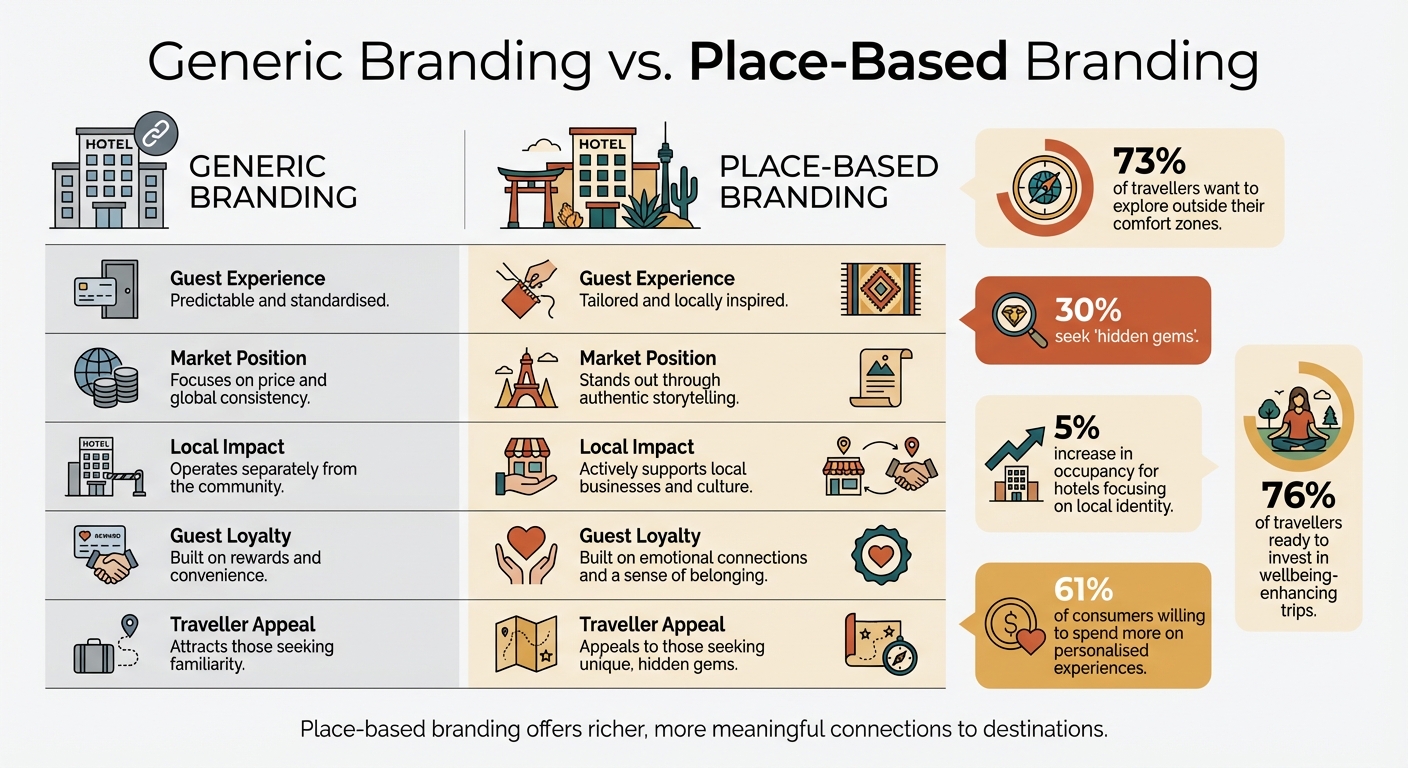
Generic vs Place-Based Hotel Branding: Key Differences
The hospitality industry has shifted. Travellers today want more than just a place to stay – they crave experiences that feel genuine, connected, and rooted in the destination. They’re moving away from cookie-cutter designs and seeking hotels that reflect the character and culture of where they are.
Place-based branding takes hotels beyond being just accommodations. It transforms them into vibrant hubs that mirror the local heritage and community. By embracing this approach, hotels create a sense of belonging that loyalty programmes alone can’t achieve. Additionally, it strengthens ties with the local economy by collaborating with artisans, vendors, and cultural experts. This partnership benefits both the hotel and the community, while offering guests a deeper connection to the destination.
The numbers back this up. In 2023, the boutique hotel guest experience design market was valued at US$9.8 billion and is forecasted to grow to US$18 billion by 2033, with a CAGR of 6.4%. Furthermore, 61% of consumers are willing to spend more on personalised experiences, and 76% of travellers are ready to invest in trips that enhance their wellbeing.
These trends highlight why place-based branding matters and why it’s worth exploring its unique benefits and advantages.
Benefits of Place-Based Branding
At its core, place-based branding taps into the emotional side of travel. When a hotel reflects its surroundings – whether through its architecture, materials, rituals, or collaborations with local businesses – it creates a true "sense of place." This isn’t just about aesthetics; it’s about fostering a connection. As Dr. Suzanne Godfrey, an Independent Brand and Marketing Consultant, explains:
"Sense of place… captures the physical aspects, culture and history of a place, as well as its impact on the senses, which can trigger emotions. Over time, it can create feelings of familiarity, comfort and security, as well as a sense of belonging."
This approach also helps hotels stand out in a crowded market. In a world dominated by global brands, properties that embrace their local identity naturally differentiate themselves. They appeal to travellers who are looking for unique, immersive experiences rather than the same standardised offerings.
Another benefit is the positive impact on the local economy. By sourcing goods from local vendors, featuring regional artists, and hiring local talent, hotels not only enrich their brand but also contribute to the community’s growth. Jeremy Wells, Partner at Longitude°, describes this as a “rising tide lifts all ships” effect, where the success of the hotel benefits everyone around it.
Finally, place-based branding creates lasting memories. When guests experience local traditions, flavours, and designs, they leave with stories tied specifically to that hotel. These unforgettable moments encourage repeat visits and inspire word-of-mouth recommendations.
Generic Branding vs. Place-Based Branding
The differences between generic and place-based branding highlight why the latter resonates more with today’s travellers.
| Feature | Generic Branding | Place-Based Branding |
|---|---|---|
| Guest Experience | Predictable and standardised | Tailored and locally inspired |
| Market Position | Focuses on price and global consistency | Stands out through authentic storytelling |
| Local Impact | Operates separately from the community | Actively supports local businesses and culture |
| Guest Loyalty | Built on rewards and convenience | Built on emotional connections and a sense of belonging |
| Traveller Appeal | Attracts those seeking familiarity | Appeals to those seeking unique, hidden gems |
Generic branding relies on uniformity – offering the same experience no matter the location. While this predictability has its advantages, it often lacks the depth and character that travellers now seek. Place-based branding, on the other hand, offers a richer, more meaningful connection to the destination, making it the clear choice for those looking for more than just a stay.
This stark contrast underscores why embracing local authenticity is key to redefining modern guest experiences.
sbb-itb-6cae99a
How to Research Local Culture and Heritage for Branding
Creating a brand that feels deeply rooted in its location requires a thorough understanding of the area’s history, traditions, and environment. By delving into these aspects, you can craft a brand story that resonates with the local heritage and identity.
Studying Local History and Traditions
Start by investigating the history of the property and its land. Dig into historical records to uncover its original purpose – was it a military hospital, a bustling wharf, or a family home? These details can form the backbone of your brand’s narrative. For example, Rosewood Hong Kong, which opened in April 2019, embraced its location’s history. The hotel introduced Holt’s Café, named after the historic Holt’s Wharf, and The DarkSide Bar, referencing Kowloon’s old nickname.
Expand your research to include the neighbourhood’s evolution. Dive into local literature, historical documents, and notable milestones. Speak with long-time residents and staff to uncover hidden stories that can give your branding more depth. A structured approach like the SUCCEED Framework can help: Savour culinary stories, Uncover property history, Celebrate key characters, Champion sustainability, Embrace local culture, Explore the environment, and Define the guest journey.
Working with Local Communities
Collaborating with local experts is key to gaining authentic insights. Build relationships with artisans, historians, business owners, and community leaders. These connections can reveal invaluable details about regional craftsmanship, traditions, and values that desk research alone can’t provide. Attending local festivals is another way to witness traditions firsthand and strengthen these partnerships.
Involving local talent in your branding process ensures authenticity. For instance, The Lodge at Marconi in Tomales Bay, California, worked closely with residents and explored historical archives to weave the property’s story into its brand identity. Similarly, Mandarin Oriental Jumeira in Dubai partnered with local artists to merge Arabic and Asian art, creating a balanced dialogue between the brand’s heritage and the local context.
Equip your team with knowledge about the area’s history and artisanal stories so they can serve as cultural ambassadors. This ensures the respectful and accurate use of cultural elements while also enriching the guest experience.
Finding Landmarks and Local Elements
Once you’ve engaged with local experts, identify physical and sensory markers that tie your brand to the area. Look for visual landmarks like parks, waterfalls, or iconic buildings, and explore sensory elements such as sounds, scents, and textures. These can inspire design features, guest experiences, and storytelling opportunities. For example, the Bvlgari Resort Dubai, which opened in December 2017, incorporated a "brise soleil" inspired by white coral, honouring the Arabian Gulf’s pearl diving and maritime heritage.
Consider sensory details like the sound of church bells, waves, or traditional music, and scents such as oud or native flowers, to create an immersive sense of place. Study how the local climate has influenced traditional architecture, such as wind towers or open courtyards, and explore the use of materials like local stone, reclaimed wood, or handcrafted tiles. These not only connect your brand to the region but also support local industries.
Finally, research traditional recipes and native ingredients to shape dining experiences that reflect the area’s culinary traditions. These elements can deepen the connection between your brand and its surroundings, offering guests a taste of the region’s heritage.
How to Implement Place-Based Branding
Once you’ve delved into the local culture and heritage, the next step is turning that knowledge into reality. This phase is all about weaving these insights into your design, partnerships, and guest experiences. By doing so, your brand becomes a true reflection of its surroundings, creating a connection that feels genuine and memorable.
Using Local Materials and Architecture
Choosing materials from the region helps anchor your property to its location while also supporting nearby businesses. Think natural stone, reclaimed wood, and locally made tiles – these not only reduce environmental impact but also highlight the area’s distinct textures and colours. A thoughtful mix of traditional and modern design can strike the perfect balance between heritage and comfort. For instance, you might combine open-air courtyards with sleek glass structures or pair clay tile roofs with minimalist interiors. Features like water elements, garden pathways, or open-air lobbies further blend the indoor and outdoor spaces, celebrating the natural beauty of the area.
"Incorporating and working with local artisans has become a trend in lobby and guestroom design, bringing authenticity and a strong sense of place to interiors." – Natalie Smith, Design Director and Principal, ROAM Interior Design
Partnering with Local Artists and Vendors
Teaming up with local creatives, chefs, and suppliers not only enhances authenticity but also helps your brand stand out. Commissioning murals, sculptures, or custom furniture from regional artists can transform your spaces into one-of-a-kind attractions. Even small touches, like in-room amenities sourced from nearby producers – think artisanal soaps, snacks, or teas – add value and create opportunities for retail sales.
These partnerships don’t just look good – they deliver results. Hotels that promote local artisans often see a 15–25% boost in guest satisfaction scores and a 10–20% increase in ancillary revenue from retail sales and workshops. To deepen the connection, consider adding placards or QR codes next to artwork or products, sharing the creator’s story and cultural background. Train your staff to highlight these stories during guest interactions, turning them into storytellers for your brand. Rotating displays and offerings seasonally can keep things fresh and showcase a broader range of local talent.
Organising Local Events and Experiences
Beyond design and partnerships, hosting events is a fantastic way to connect guests with the local scene. Workshops led by artisans – like pottery, weaving, or cooking classes featuring native ingredients – offer hands-on experiences that guests will treasure. Pop-up markets featuring local craftspeople in high-traffic areas, such as lobbies, not only draw in guests but also encourage visits from the local community.
You can also plan cultural performances, chef demonstrations, or artist talks during quieter periods to boost engagement and revenue. Packaging these events with lodging options adds extra value and sets your brand apart. Hotels that embrace local culture in this way often see revenue increases of up to 10%, as guests are willing to pay more for authentic experiences. Sharing these moments on social media can amplify their impact – posts featuring artisan content can drive up guest engagement by as much as 30%, as travellers love sharing these unique experiences with their followers.
How Brand Husl Supports Place-Based Branding for Hotels

Brand Husl focuses on integrating local identity into hotel branding, helping properties connect with their surroundings in meaningful ways.
Full Branding Services
Brand Husl uses a five-step process – Discover, Develop, Design, Deploy, Deliver – to weave local identity into every aspect of hotel branding. During the Discovery phase, they dive into audience insights, competitor analysis, and local market research to pinpoint what makes your hotel stand out. From there, they create a strategy that aligns your brand with its geographic and cultural setting. Their expertise covers everything from brand audits and naming to visual identity, signage systems, and interior branding, ensuring every detail reflects the local essence.
In markets like the UAE, where diversity is key, their ability to craft bilingual brand identities is a standout feature. For instance, the ADCOOP rebrand in December 2025 reimagined a beloved UAE institution, blending traditional heritage with a modern twist to appeal to both locals and international visitors.
Custom Solutions for Place-Based Projects
Brand Husl customises each project to highlight local culture and heritage. They transform research into real-world experiences through elements like interior branding, wayfinding systems, and pop-up concepts. For the MAIR Group rebrand in September 2025, their focus on a "Vision of Growth and Community" resulted in a brand identity that honoured local connections while supporting future growth.
Acting as both brand architects and storytellers, they help craft narratives that showcase your hotel’s ties to local artisans, vendors, and traditions. Their collaborative approach ensures a seamless execution of ideas, from staff behaviour to packaging design, creating a cohesive brand identity across all touchpoints.
Brand Husl Packages Overview
| Package Type | Focus Areas | Place-Based Applications |
|---|---|---|
| Custom Branding | Strategy, Story, Identity Design, Guidelines | Tailored brand stories highlighting local heritage, bilingual identity systems, and visual styles reflecting regional aesthetics |
| Event Branding | Experience Design, Pop-ups, Exhibition Stands | Immersive experiences and temporary installations that celebrate local culture and community |
| Digital Branding | Social Content, Marketing Toolkits, Digital Media | Online narratives spotlighting local landmarks, partnerships, and connections with the community |
Each package can be adjusted to include local materials, promote regional craftsmanship, and emphasise your hotel’s connection to its environment. Their detailed 15-point brand audit ensures consistency across all platforms, preserving your place-based identity in both physical and digital spaces.
Conclusion
Place-based branding transforms hotels from simple accommodations into destinations that connect deeply with both travellers and the local community. With most travellers today venturing beyond their comfort zones to uncover hidden gems, aligning a hotel’s identity with its surroundings is crucial – especially in competitive markets like the UAE.
Hotels that weave local elements into their brand create stronger emotional ties with guests. Take Mandarin Oriental Jumeira, for instance. By celebrating the Jumeira 1 neighbourhood, it gave residents a renewed sense of connection through curated cultural programmes and collaborations with local artisans. Similarly, One&Only Royal Mirage, which opened in 1999, embraced its setting as an Arabian fortress, establishing a new standard for Middle Eastern hospitality.
"Incorporating local flavour into hotel branding is no longer optional but essential for thriving in today’s competitive market." – Jeremy Wells, Partner at Longitude°
As competition grows fiercer, focusing on local identity becomes essential for guest loyalty and steady revenue streams. By integrating local heritage, collaborating with regional creatives, and reflecting authentic cultural elements, hotels can maintain premium pricing and build lasting relationships with guests.
This shift highlights the importance of a branding strategy that blends local heritage with tangible business results. In this evolving landscape, having a branding partner who can authentically represent local identity is critical. Brand Husl’s end-to-end approach ensures that your hotel’s identity reflects its local culture across every guest interaction. Whether launching a new property or repositioning an existing one, place-based branding offers the differentiation needed to stand out and the genuine connection required to foster long-term guest loyalty. By embedding local culture into every aspect, hotels can evolve into vibrant landmarks that resonate with their communities.
FAQs
How can I use local cultural elements without stereotyping?
To steer clear of stereotypes, it’s essential to dive into thorough research and work closely with local experts, artisans, and community leaders. By focusing on genuine regional traditions, historical narratives, and artistic elements, you can ensure the representation remains both respectful and accurate. Collaborating with cultural historians or skilled artisans not only honours the heritage of the community but also provides guests with a truly immersive experience. This thoughtful approach helps avoid appropriation and builds meaningful connections with the local culture.
What’s the quickest way to audit my hotel for a stronger sense of place?
To give your hotel a more grounded connection to its surroundings, take a close look at how your branding, design, and guest experiences highlight the local culture and heritage. Start with your visual identity – think about signage, décor, and other design elements. Do they incorporate features that resonate with the area’s traditions or aesthetic? Then, consider your guest offerings. Are your food options, activities, or events tied to the community in a meaningful way? Lastly, make sure your messaging and any rituals you’ve established reflect the distinct character of your destination. These touches can help create a deeper, more genuine connection for your guests.
How can I measure ROI from place-based branding in my hotel?
To gauge ROI from place-based branding, focus on tracking key performance indicators such as occupancy rates, average daily rate (ADR), and revenue per available room (RevPAR). By comparing data from before and after branding efforts, you can pinpoint the financial effects of your strategy.
Beyond financial metrics, keep an eye on guest satisfaction scores and your online reputation. These help measure the emotional connection and perception your branding fosters. Together, these insights provide a clear picture of how branding influences bookings, boosts rates, and builds guest loyalty.
Related Blog Posts

BRAND HUSL
We’re a collective of brand strategists, designers, and unapologetic truth-tellers who’ve spent over two decades turning chaos into clarity for businesses across the globe. From global names to fearless startups, we’ve built brands that stick, scale, and sell—without the fluff. Everything we create is rooted in strategy, storytelling, and ROI, because good branding isn’t just pretty—it’s powerful.